
From goods on the scale to a shortlist of products
A customer places fruit or vegetables on a self-service scale and needs to find the right product. For Bizerba, we developed a computer vision solution that makes this step easier. A camera captures the goods and a model suggests likely products for the customer to choose from.
Our work covers recognition on the scale, model preparation and training, and cloud services for device monitoring. The delivery also includes scale integration, version distribution and operational support.
How the solution fits together
Recognition runs locally on the device. Azure supports image data, training, version management and monitoring. Each weighing operation can be evaluated without waiting for cloud inference, while operational data helps improve subsequent model versions.
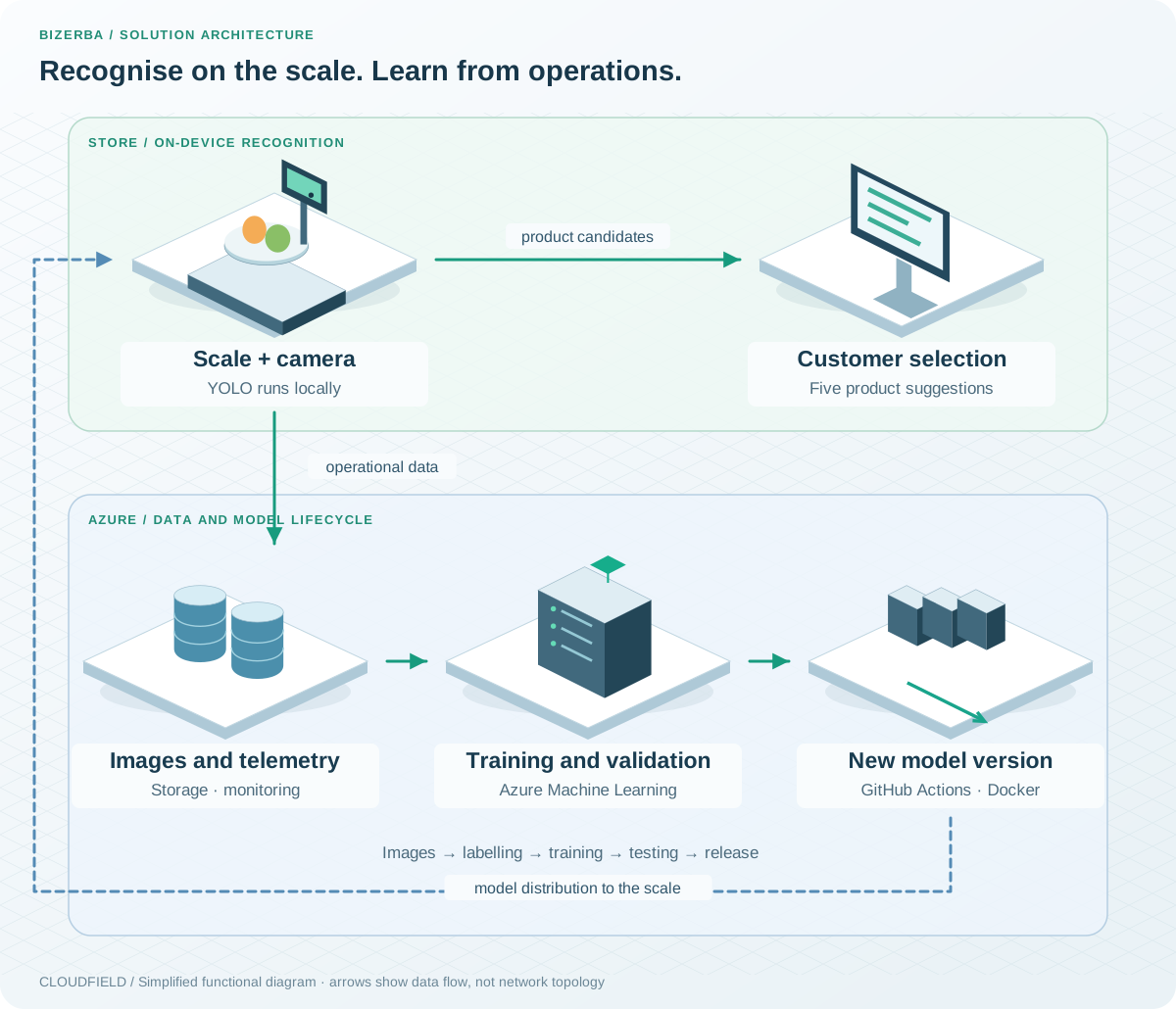
The diagram separates local recognition from cloud services. Arrows show functional relationships and the model lifecycle, rather than a detailed network topology.
Recognition within the shopping workflow
After goods are placed on the scale, the system waits for the weight to stabilise, takes an image and evaluates it with a machine learning model. The display presents candidate products. The customer selects the correct one and proceeds with weighing and label printing.
The documented Fajne deployment presents five product suggestions. Evaluation therefore checks both the first prediction and whether the correct product appears in the shortlist shown to the customer. Tests measure processing speed alongside top-five recognition success.
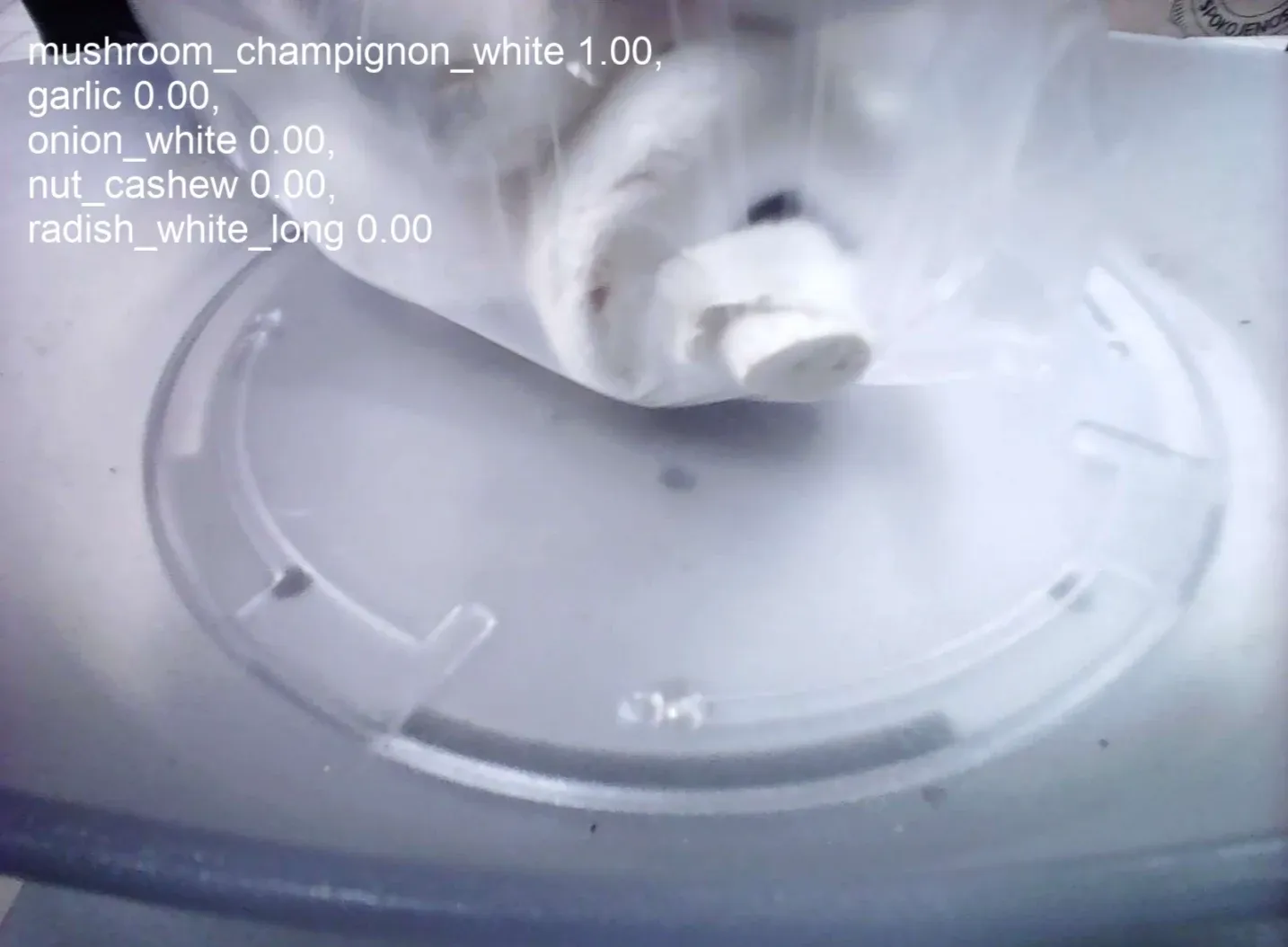
Recognition output from the testing documentation. The displayed score applies to this image, not to overall system accuracy.
Learning from the actual product range
The appearance of produce varies with variety, lighting, packaging and placement on the scale. Seasonal changes introduce further products. Development therefore includes sorting and labelling images, training models and comparing versions against a shared test set.
We use Azure Machine Learning, Python and YOLO-family models. Misclassified examples and requests for new products feed into subsequent model preparation. Each new version must pass quality and speed checks on the target device.
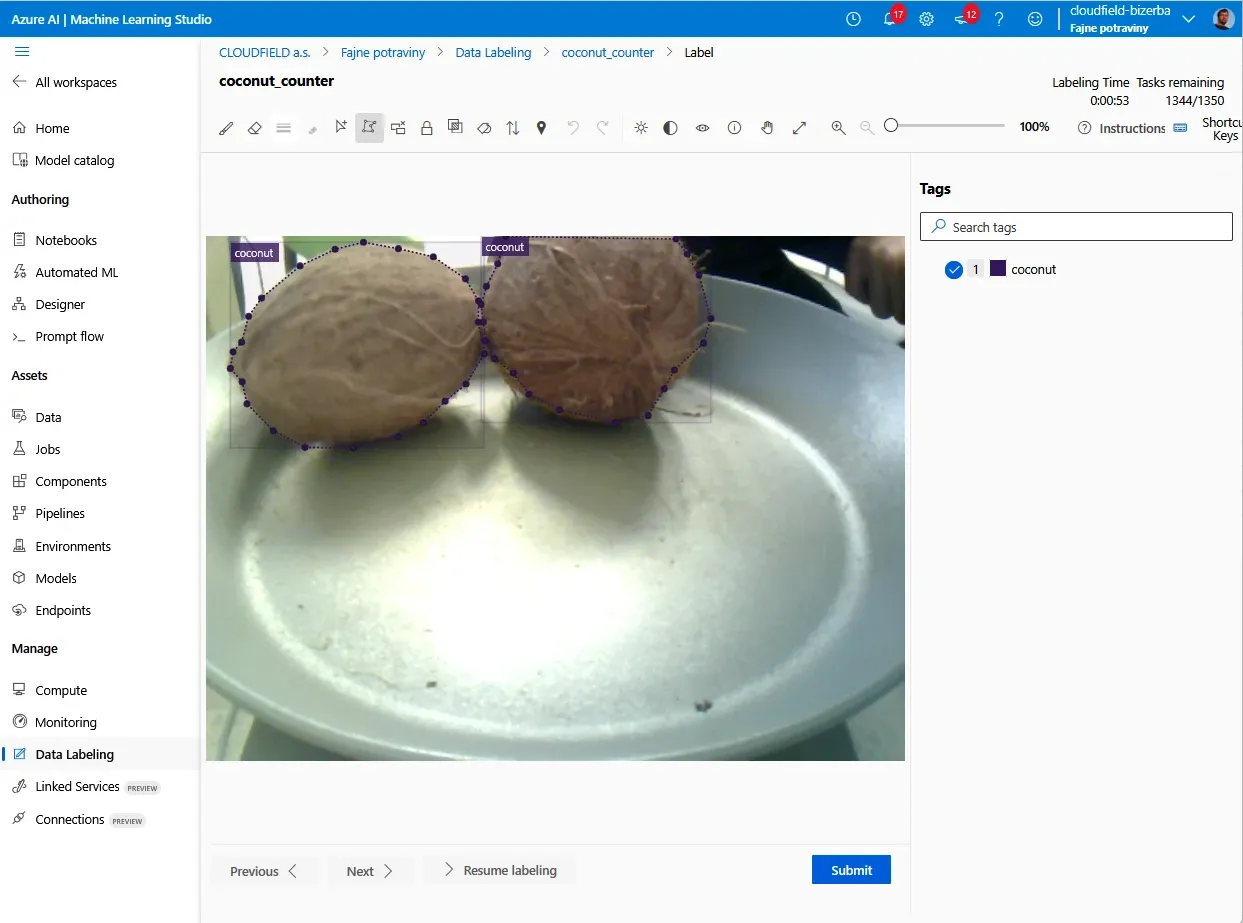
Preparing training data in Azure Machine Learning. Annotated objects connect the appearance of goods to product categories.
From testing to store operations
For model 0.9.20, the Fajne testing documentation reports an average complete cycle of 1,540 ms, including 467 ms for inference, evaluated on 50 scales. These figures describe a specific tested deployment. The complete cycle also includes weighing, stabilisation and image capture.
Operational monitoring tracks device availability, inference time and resource use. Azure telemetry and logs help distinguish model issues from problems with a particular scale. GitHub Actions and container packages support controlled releases, with deployment procedures and documentation for the operations team.
Technologies and our role
| Area | Technologies | What we deliver |
|---|---|---|
| Product recognition | YOLO, Python, OpenCV, PyTorch | Model development and scale integration |
| Model preparation | Azure Machine Learning, Azure Storage | Data processing, training and validation |
| Operations | Azure Monitor, Log Analytics | Telemetry and device monitoring |
| Releases | Docker, GitHub Actions, Azure Container Registry | Packaging and distribution workflow |
What the partnership delivers
Bizerba gained a connected system spanning product recognition and operational support. Customers choose from a shortlist, operations teams have evidence for troubleshooting, and developers can adapt the model to new product ranges. The model on the scale and its ongoing improvement form one solution.